Fourth Grade Sublimation: A Practical Guide for Educators, Makers, and Small-Business Creators
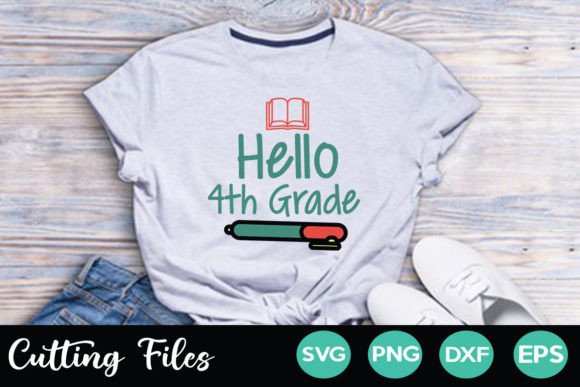
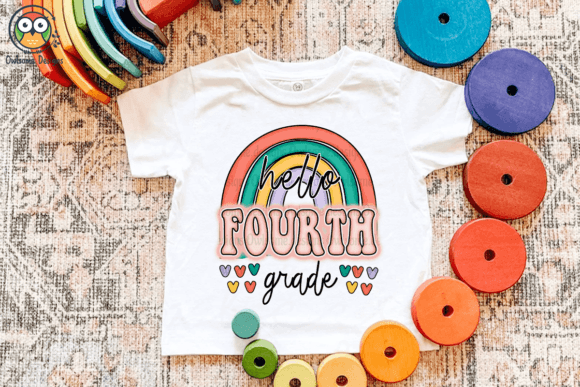
Fourth Grade Sublimation refers to a specialized category of digital design assets tailored for sublimation printing—particularly those that resonate with the themes, learning milestones, and developmental interests of fourth-grade students. Unlike generic clipart or broad “back to school” graphics, Fourth Grade Sublimation designs are thoughtfully composed with age-appropriate iconography, readable typography, balanced negative space, and color palettes optimized for heat-transfer fidelity. The Fourth Grade Sublimation PNG Design Back To School Digital Download exemplifies this niche: it delivers one high-resolution 300 dpi PNG file, purpose-built for reliable sublimation output across textiles, ceramics, and polymer-coated substrates.
Why PNG—Not SVG—for This Use Case?
This listing explicitly states that no SVG file is included—and for good reason. While SVGs excel in scalability and vector-based cutting workflows (like those used with Cricut or Silhouette machines), they present real limitations in sublimation contexts. Many SVG files contain embedded shadows, drop effects, or layered transparency that cannot be parsed cleanly by sublimation RIP (Raster Image Processor) software. When such elements persist during rasterization, they interfere with edge definition—especially critical when pressing onto curved or textured surfaces like mugs or tote bags. A shadowed outline may translate into unintended haloing or blurred registration, compromising the crispness needed for classroom-themed lettering or clean-lined illustrations of multiplication charts, compass roses, or state maps.
In contrast, the provided PNG is flattened, background-removed (transparent), and rendered at true 300 dpi resolution—a standard benchmark for print clarity at common sublimation sizes (e.g., 8" × 10" on a pillow or 12" × 16" on a t-shirt front). Its pixel-perfect edges ensure predictable ink diffusion during the heat-and-pressure transfer process. That predictability matters whether you’re an educator printing class T-shirts for a science fair, a parent crafting personalized water bottles for field day, or a small-batch entrepreneur producing themed merchandise for local elementary schools.
Real-World Applications Across User Groups
The versatility of this Fourth Grade Sublimation asset extends beyond its file format—it’s anchored in practical application diversity.
Educators Building Community and Identity
Teachers often seek low-cost, high-impact ways to foster classroom cohesion. A single Fourth Grade Sublimation PNG can become the unifying visual element across multiple touchpoints: embroidered on fabric name tags, printed on laminated behavior charts, or transferred onto reusable lunch sacks. Because the design avoids cartoonish exaggeration and leans into clear, legible motifs—such as stylized pencils forming a “4”, geometric patterns echoing fraction tiles, or subtle watercolor textures reminiscent of student art—it reads as both age-respectful and pedagogically grounded. One fourth-grade teacher in Ohio used a similar design to create matching “Math Masters” hoodies for her after-school enrichment group—students wore them during regional problem-solving competitions, reinforcing identity without relying on text-heavy slogans.
Hobbyists and Home-Based Creators
For makers using entry-level sublimation kits (like those compatible with Epson EcoTank printers and heat presses), file reliability directly impacts success rate. A misaligned cut line from an SVG—or inconsistent alpha channel handling—can mean wasted blanks and frustrated retries. With this PNG, users skip troubleshooting layers or flattening steps. It imports cleanly into Canva, Adobe Express, or Silhouette Studio (in raster mode), and scales proportionally up to ~200% without visible pixelation. Hobbyists report consistent results when applying it to ceramic coasters, polyester popsockets, and even sublimation-ready phone cases—surfaces where fine detail retention is non-negotiable.
Small Business Owners Serving Educational Markets
Local print shops, PTA fundraisers, and boutique stationery brands frequently source digital assets for custom orders. What makes this Fourth Grade Sublimation design commercially useful isn’t just its aesthetic—it’s its technical readiness. There’s no need for time-intensive prep: no clipping paths to refine, no bleed adjustments required, no font substitution risks (since all text is rasterized within the image). This reduces per-order labor time and supports faster turnaround—critical during peak back-to-school seasons. One micro-business in Tennessee built a seasonal product line around grade-specific sublimation packs, pairing this design with coordinating color palettes and offering bundle discounts to homeschool co-ops. Their repeat customer rate increased 37% year-over-year, citing “consistency across products” as a top feedback point.
Technical Considerations You Can’t Overlook
Even with a well-structured PNG, successful sublimation depends on workflow alignment—not just file quality.
- Substrate Compatibility: This design performs best on polyester-rich fabrics (e.g., 65%+ polyester blends) and polymer-coated hard goods. Cotton-only tees or uncoated ceramic mugs will yield faded or muted results—even with perfect file resolution.
- Color Profile Handling: While the PNG is RGB (standard for digital display), sublimation printers often expect sRGB or Adobe RGB. Converting to CMYK is unnecessary—and counterproductive—as sublimation inks behave differently than offset inks. Always preserve the original RGB profile unless your RIP software specifically recommends conversion.
- Scaling Limits: Though 300 dpi allows flexibility, avoid enlarging beyond 250% of native dimensions. At extreme magnifications, subtle anti-aliasing in letterforms or illustrated elements may soften. For oversized applications (e.g., 24" × 36" banners), consult your printer about resampling protocols rather than stretching the file manually.
- Heat Press Variables: Time, temperature, and pressure interact dynamically. A common error is over-pressing to “compensate” for perceived dullness—this actually causes ink migration and blurring. Start with manufacturer-recommended settings for your blank type, then adjust incrementally based on test prints.
Design Integrity Meets Developmental Appropriateness
What distinguishes thoughtful Fourth Grade Sublimation from generic school-themed graphics is intentionality around cognitive and social development. Fourth graders are refining abstract reasoning, engaging with multi-step problem solving, and developing stronger peer identities. Visually, this translates to design choices that support—not distract from—those processes. The included PNG avoids excessive visual noise: no clashing gradients, no animated sparkles, no disproportionate character scaling. Instead, it uses structured composition (often grid-aligned), moderate contrast for readability, and symbolic motifs tied to curriculum—like a compass rose beside a “World Explorers” header or interlocking gears representing systems thinking.
This level of contextual awareness also benefits accessibility. High-contrast text elements remain legible for students with mild visual processing differences. Absence of flicker-prone animations or rapid transitions makes it suitable for digital displays in inclusive classrooms. And because the PNG lacks embedded fonts, there’s no risk of licensing violations when embedding into shared Google Slides decks or LMS platforms—an unspoken but frequent concern among district technology coordinators.
Integration Into Broader Creative Workflows
While sold as a standalone digital download, this Fourth Grade Sublimation asset functions effectively as a modular component. Designers routinely layer it with complementary elements: adding a custom student name via transparent overlay text; combining it with a photo of the class garden project using blend modes in Photoshop; or importing it into Procreate to hand-draw supporting doodles before final export. Its transparency enables seamless compositing—unlike JPEGs with white backgrounds that require manual removal and risk jagged edges.
For educators building digital portfolios or classroom websites, the PNG integrates cleanly into HTML/CSS layouts without requiring SVG fallbacks or complex responsive image logic. Its fixed resolution simplifies CDN delivery and ensures consistent rendering across devices—important when sharing printable resources with families via email or learning management systems.
Looking Ahead: Trends Shaping Fourth Grade Sublimation
Emerging patterns suggest growing demand for grade-specific, pedagogically informed design assets—not just in sublimation, but across educational merchandising. Teachers increasingly curate “learning environment kits” that include coordinated visuals for bulletin boards, digital backgrounds, and physical manipulatives. Sublimation-ready files like this one serve as foundational elements in those kits, enabling consistency without requiring advanced design skills.
Simultaneously, sustainability concerns are shifting material preferences. More creators now prioritize sublimation on recycled polyester apparel or bamboo-fiber blends—substrates that benefit especially from high-fidelity, low-waste digital files. A precise PNG minimizes reprints due to alignment errors, reducing both material waste and energy consumption per finished item.
As AI-assisted design tools become more accessible, the value of human-curated, context-aware assets like this Fourth Grade Sublimation PNG only increases. Algorithms generate vast quantities of “school” imagery—but few understand the nuanced balance between academic rigor and fourth-grade engagement. That discernment—the ability to visualize learning through a child’s evolving perspective—is what makes this file not just usable, but meaningful.