Fifth Grade Is Magical: A Versatile Back-to-School Design for Educators, Makers, and Gift-Givers
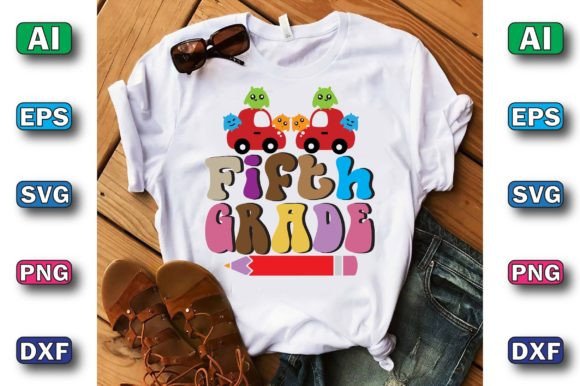
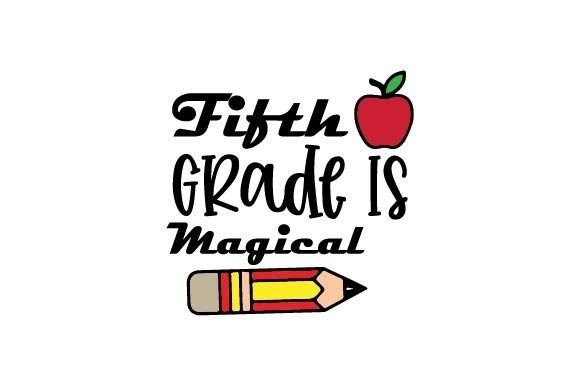
When students step into fifth grade, something shifts—not just academically, but emotionally and socially. It’s the year multiplication tables give way to fractions with confidence, when book reports evolve into literary analysis, and when classroom community begins to feel like shared ownership. That quiet transformation—the spark of independence, curiosity, and budding self-expression—is what Fifth Grade is Magical captures so authentically. More than a slogan or decorative phrase, it’s a resonant cultural touchstone for educators, parents, and students alike—and now, it’s been thoughtfully translated into a flexible, production-ready design system built for real-world use.
Why This Design Resonates Across Age Groups and Roles
The strength of Fifth Grade is Magical lies in its layered accessibility. To a ten-year-old, it’s affirming—a visual nod that their growth matters. To a teacher, it’s a gentle reminder of the subtle magic they nurture daily: the “aha” moment during a science demo, the first time a reluctant writer submits a full paragraph, the collaborative energy of a group project clicking into place. For parents, it evokes nostalgia and pride—remembering their own fifth-grade milestones while witnessing new ones unfold. And for creators and small-business owners, it offers emotional resonance without cliché: warm but not saccharine, nostalgic but forward-looking, simple in execution yet rich in implication.
Design Flexibility Meets Real-World Production Needs
This isn’t a single-image download masquerading as a design suite. Fifth Grade is Magical ships as a carefully curated bundle of industry-standard file formats—SVG, DXF, PNG with transparent background, PDF, and EPS—each serving distinct production pathways. That intentional format diversity means users aren’t forced to convert, trace, or compromise quality. SVG files scale infinitely for web use or digital embroidery previews. DXF ensures precision when feeding vector paths into CNC routers or laser cutters. The high-resolution PNG with alpha channel works seamlessly in Canva, Adobe Express, or Cricut Design Space for quick mockups or layered prints. PDF preserves typographic integrity for professional printing, while EPS maintains compatibility with legacy design software still in use across school print shops and small marketing agencies.
Seamless Integration with Popular Cutting Machines
For educators crafting classroom decor or hobbyists making personalized back-to-school gifts, compatibility isn’t optional—it’s essential. The Fifth Grade is Magical files are tested and optimized for Cricut Explore and Maker series, Silhouette Cameo (all generations), Brother ScanNCut (including SDX models), and other mainstream cutting platforms. No manual node adjustment required. No unexpected offset or scaling drift. When loaded into Cricut Design Space, the text layers retain clean kerning; when imported into Silhouette Studio, the compound paths hold without flattening errors. That reliability saves hours—especially during late-August prep when teachers are balancing supply lists, seating charts, and lesson planning.
Practical Applications Beyond T-Shirts and Mugs
While t-shirts, mugs, and tote bags are natural starting points—and remain highly effective—the true utility of this design emerges in less obvious contexts. Consider a fifth-grade teacher laminating the SVG version onto durable vinyl to create reusable “Magic Moment” reward badges. Or a PTA committee using the PDF layout to print 18” x 24” posters for open house displays—paired with student-drawn illustrations of what “magic” means to them. A homeschool co-op might import the EPS file into Inkscape to modify colors for seasonal themes: deep blues and golds for fall, mint and coral for spring celebrations. Even school librarians have adopted it—embedding the transparent PNG into digital newsletters alongside book recommendations tagged #FifthGradeIsMagical.
Thoughtful Customization Without Compromising Integrity
The design intentionally avoids over-decoration. There are no embedded clipart dragons, wands, or stars that date quickly or limit reinterpretation. Instead, it relies on balanced typography—rounded yet grounded sans-serif letterforms, subtle texture in the “is” ligature, and generous spacing that invites integration. Users regularly report success recoloring individual letters for school spirit days (e.g., red-and-white for homecoming week), adding minimal outlines for heat-transfer vinyl contrast, or nesting the phrase inside hand-drawn chalkboard borders created in Procreate. Because the core vector structure remains uncluttered, those adaptations feel intentional—not like overlays masking weak foundations.
Supporting Diverse Learning Environments
In today’s educational landscape—where classrooms range from fully remote pods to hybrid labs to traditional brick-and-mortar spaces—the Fifth Grade is Magical design adapts without friction. Digital learning coordinators embed the SVG in interactive whiteboard templates for morning meetings. Special education teams print tactile versions using puff ink or embossed paper, pairing the phrase with social-emotional check-in icons. Dual-language programs translate the sentiment (“Quinto Grado es Mágico”) and reuse the same vector skeleton—maintaining visual continuity across language groups while honoring linguistic authenticity. Even after-school coding clubs have repurposed the DXF file as a base layer for laser-cut acrylic keychains programmed with micro:bit LEDs—turning “magical” into literal light.
Considerations for Ethical and Sustainable Use
As with any widely shareable creative asset, thoughtful application matters. The design was created with inclusivity in mind: no gendered imagery, no assumptions about family structure or socioeconomic background, and color palettes tested for common forms of color vision deficiency. When used commercially—such as by a local print shop fulfilling class T-shirt orders—the license permits production for end-use (i.e., giving shirts to students) but does not extend to reselling the digital files themselves. Educators distributing modified versions should retain attribution where appropriate, especially when sharing adapted resources in educator communities like Teachers Pay Teachers or Edutopia forums. Importantly, the file bundle includes a plain-text license summary—not buried in fine print—to support transparency and responsible adoption.
Workflow Integration for Time-Conscious Creators
For professionals juggling multiple projects—say, a graphic designer supporting three different schools’ back-to-school campaigns—the modular nature of the bundle accelerates workflow. Need a monochrome version for embroidery digitizing? Pull the SVG, ungroup, and convert strokes to paths. Prepping for sublimation mugs? Use the high-DPI PNG at exact 300 ppi with bleed margins already calculated. Creating a classroom banner with fabric paint? Export the PDF to Illustrator, outline fonts, then generate a stencil-friendly negative version. Each format serves as a reliable entry point—not a dead end requiring rework.
Long-Term Value Beyond the First Week of School
Unlike trend-driven graphics that fade by October, Fifth Grade is Magical gains meaning over time. Students who receive a backpack tag or notebook sticker in September often keep it through graduation—scanned into digital portfolios or taped inside college applications as a touchstone. Teachers display printed versions in their rooms for multiple years, updating only the year date while keeping the phrase constant—a visual throughline across cohorts. Even district-level curriculum teams have referenced the concept in professional development modules on developmental psychology, using the phrase as an anchor for discussions about cognitive readiness and social-emotional scaffolding.
That longevity stems from fidelity to lived experience—not marketing hype. It doesn’t promise perfection. It doesn’t erase challenges. Instead, it names something quietly profound: that fifth grade, with all its transitions and uncertainties, contains moments worth celebrating precisely because they’re human, imperfect, and deeply meaningful. Whether cut from iron-on vinyl for a child’s first solo science fair display or engraved onto a wooden award for a retiring educator, the phrase carries weight because it’s earned—not assigned.
Getting Started Without Overwhelm
New users often ask where to begin. Start small: open the PNG in your phone’s photo editor and add it to a screenshot of your class schedule. Print one copy of the PDF on cardstock, cut it out with scissors, and tape it beside your desk as a reminder during grading marathons. Load the SVG into Cricut Design Space, resize to 4”, and cut from glitter vinyl for a set of “magic” bookmarks. None require expertise—just intention. As familiarity grows, explore deeper integrations: combine the DXF with custom illustrations in Fusion 360 for 3D-printed pencil toppers, or import the EPS into Figma to build an animated “magic reveal” slide for parent orientation presentations.
Ultimately, Fifth Grade is Magical succeeds not because it’s technically flawless—but because it meets people where they are: students discovering their voice, teachers nurturing resilience, makers seeking purposeful projects, and families marking time with tangible, heartfelt gestures. Its power lies in how easily it moves between screen and shelf, classroom and craft room, tradition and innovation—always holding space for wonder, without demanding it be loud.