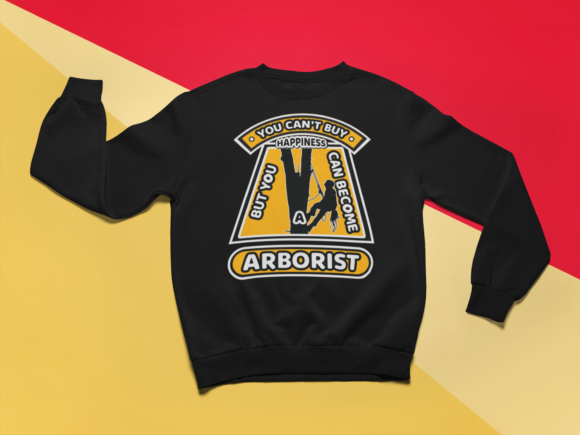
You Can’t Buy Happiness, but You Can Become an Arborist: Why Purpose-Driven Craftsmanship Is Reshaping Professional Identity
In an era defined by digital saturation, algorithmic curation, and transactional engagement, a quiet but powerful shift is taking root—literally and metaphorically. The phrase You Can’t Buy Happiness but You Can Become an Arborist isn’t just witty wordplay on a chainsaw shirt; it’s a cultural signal. It reflects a growing professional and consumer movement where meaning, mastery, and tangible impact are replacing passive consumption as primary drivers of fulfillment—and this has profound implications for creators, entrepreneurs, marketers, and skilled trades professionals alike.
A Movement Rooted in Real Work, Not Just Results
Arboriculture—the science and practice of cultivating, managing, and studying trees—is one of the oldest human professions, yet it’s experiencing unprecedented visibility. Why? Because it sits at the intersection of ecological urgency, hands-on expertise, and visible stewardship. When someone wears a shirt that declares You Can’t Buy Happiness but You Can Become an Arborist, they’re not making a joke about labor—they’re affirming a worldview: that deep satisfaction arises from skill applied with intention, from work that leaves measurable good in its wake.
This resonates across industries. Freelancers building sustainable client relationships, product designers prioritizing longevity over virality, and marketers shifting from click-chasing to community-building—all mirror the arborist’s ethos: long-term health over short-term gain, rooted systems over surface-level fixes.
Why This Message Is Gaining Momentum Now
Three converging forces explain the rising relevance of You Can’t Buy Happiness but You Can Become a Arborist—and why apparel like the Chainsaw Shirt has become more than merchandise:
- Climate literacy is mainstreaming. From urban forestry initiatives to corporate ESG reporting, tree care is no longer niche—it’s strategic infrastructure. Arborists are now recognized as frontline climate practitioners, and their tools (yes, even chainsaws) symbolize agency in ecological repair.
- The “anti-hustle” renaissance is accelerating. Professionals increasingly reject burnout-as-badge-of-honor narratives. Instead, they seek workflows grounded in rhythm, physicality, and craft—qualities embodied by arborists who calibrate chainsaw tension, assess canopy structure, and time pruning to seasonal biology.
- Consumer identity is shifting from ownership to affiliation. People don’t just buy shirts—they signal alignment. A Chainsaw Shirt worn by an arborist dad, a landscape architect mom, or a forestry student isn’t ironic cosplay. It’s a declaration of values: competence, care, and continuity.
More Than a Shirt: Design as Cultural Translation
The Chainsaw Shirt referenced in the phrase—“This chainsaw shirt is perfect for everyone who loves chainsaws, arborists, arborist lover women, Arborist Dad…”—functions as a cultural artifact. Its design language bridges technical authenticity and inclusive appeal. Notice how its messaging intentionally avoids gendered exclusivity (“arborist lover women,” “granny,” “sister,” “friend”) while honoring lineage (“Aunty,” “Dad,” “Brother”). That’s not marketing fluff—it’s responsive design thinking applied to audience psychology.
For entrepreneurs and brand builders, this signals a critical insight: product narratives must reflect lived diversity, not demographic checkboxes. A shirt marketed only to “male loggers” misses the teachers using tree biology units in classrooms, the therapists incorporating nature-based interventions, or the BIPOC-led urban reforestation collectives revitalizing neighborhood canopies. The phrase You Can’t Buy Happiness but You Can Become a Arborist works because it centers vocation—not just occupation—as a pathway to belonging.
From Backyard Chainsaw Play to Professional Reinvention
The line “Wear it the next time you play with chainsaws in the backyard” may sound lighthearted—but it points to something deeper: the democratization of skilled practice. With accessible certifications (like ISA’s Certified Arborist program), open-source pruning guides, and local apprenticeship pipelines, arboriculture is becoming a viable second act for displaced tech workers, educators seeking tactile renewal, or veterans transitioning into land-based service roles.
That backyard moment matters. It’s where curiosity meets capability—where someone tests a chainsaw’s kickback brake, learns bark grafting techniques from a YouTube tutorial, or joins a municipal tree inventory volunteer team. These micro-engagements build confidence, community, and often, career pivots. Marketers and platform builders should recognize this: the “chainsaw shirt” isn’t just apparel—it’s an entry point, a conversation starter, a low-barrier on-ramp to professional identity.
Gift-Giving as Values Alignment
Consider the gift context cited: “Perfect Christmas, Back to School, Easter, Halloween, Thanksgiving, American patriots, Birthday gift for mom, daughter, sister, granny, friend.” At first glance, that’s a laundry list. But read it through a behavioral lens: each occasion represents a cultural touchpoint where people express care through shared meaning—not just utility.
- A Back to School gift for a horticulture student affirms their choice of purpose-driven study.
- A Thanksgiving gift for a family member who volunteers with tree-planting nonprofits celebrates quiet, sustained contribution.
- An American patriots nod (when contextualized responsibly) connects arboriculture to land stewardship as foundational civic duty—not nationalism, but rooted citizenship.
This reframes gifting strategy entirely. It’s not about seasonal timing—it’s about aligning offerings with moments when recipients are most open to identity reinforcement. For freelancers launching branded merchandise, or SaaS founders building communities around sustainability tools, that insight is gold: people don’t buy products during holidays—they reaffirm who they are.
What This Means for Creators and Strategists
If You Can’t Buy Happiness but You Can Become a Arborist feels resonant, it’s because it mirrors broader creative and business imperatives:
- Value clarity over cleverness. The phrase doesn’t try to be cryptic or viral—it’s direct, memorable, and anchored in real-world practice. In content strategy, that means leading with user outcomes (“How this tool reduces pruning time by 30%”) before features.
- Design for ecosystem, not silos. Arborists collaborate with soil scientists, urban planners, fire ecologists, and educators. Similarly, successful platforms and campaigns thrive when built for interoperability—not isolated excellence.
- Measure legacy, not just lift. A chainsaw shirt’s success isn’t just in units sold—it’s in how many wearers go on to certify, mentor, or advocate. For marketers, that means tracking downstream behavior (e.g., webinar sign-ups post-merch purchase) alongside conversion metrics.
And for professionals navigating uncertainty—whether a freelancer redefining their niche or a marketer rebuilding trust in a polarized media landscape—the arborist offers a potent metaphor: growth requires patience, pruning enables resilience, and roots determine reach.
Conclusion: Cultivating What Lasts
You Can’t Buy Happiness but You Can Become a Arborist endures because it refuses false binaries. It doesn’t dismiss material needs—it redirects focus toward the conditions that make prosperity meaningful: competence, connection, and contribution. The chainsaw shirt is both literal and symbolic: a garment for those who wield tools with respect, who understand that every cut serves a larger structure, and who know that true security grows—not from stock options alone, but from soil, season, and steady hands.
So whether you’re designing a B2B SaaS interface, launching an eco-conscious apparel line, advising municipalities on green infrastructure, or simply choosing what to wear while mentoring a new hire—ask yourself: What am I cultivating? Because in the end, the most valuable things aren’t purchased. They’re grown, tended, and passed on—branch by branch, season by season.