My Money Grows on Trees: Why This Chainsaw-Themed Arborist Shirt Resonates Far Beyond the Workshop
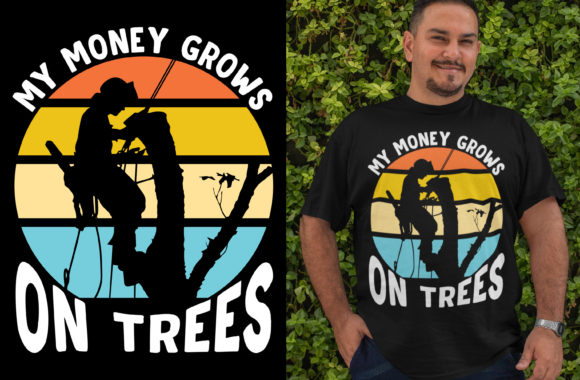
At first glance, “My Money Grows on Trees” sounds like playful irony—especially when emblazoned across a rugged cotton tee alongside a stylized chainsaw. But for arborists, tree care professionals, forestry educators, and even backyard stewards who routinely assess canopy health, prune storm-damaged limbs, or manage urban forests, the phrase carries layered meaning. It’s not just humor; it’s an acknowledgment of ecological economics, skilled labor value, and the quiet infrastructure that keeps cities livable and ecosystems resilient. This shirt—designed for arborists, loved by families, and worn with pride from job sites to holiday gatherings—serves as both cultural shorthand and subtle advocacy.
The Real-World Economics Behind the Phrase
“My Money Grows on Trees” is more than a pun—it reflects measurable economic contributions. Urban trees in the U.S. generate over $18 billion annually in ecosystem services: stormwater interception, air pollution removal, carbon sequestration, and energy savings from shade. A single mature street tree can reduce annual cooling costs for nearby buildings by up to 10%. Municipal arborists don’t just trim branches—they optimize municipal budgets through strategic canopy management. Certified arborists (through ISA or TCIA) often command salaries commensurate with other licensed technical professionals because their work directly impacts public safety, property values, and climate adaptation planning.
That context transforms the shirt from novelty apparel into a quiet statement of professional identity. When an arborist dad wears it while teaching his daughter how to identify ash borer damage—or when a female arborist pins it to her vest before inspecting a heritage oak on a historic campus—the phrase becomes grounded in expertise, not whimsy.
Designed for Function, Worn for Meaning
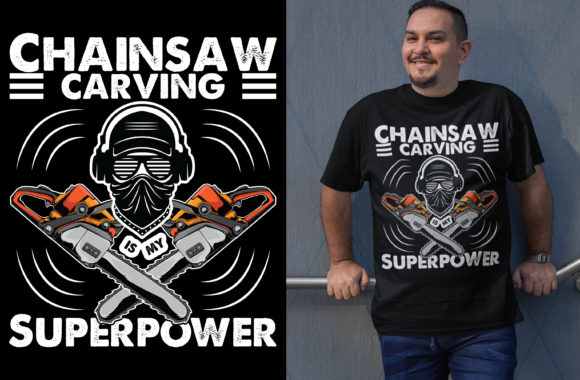
This isn’t a generic graphic tee mass-produced for trend-chasing. The design intentionally balances visibility and authenticity: the chainsaw icon is clean-lined and technically accurate—not cartoonish—featuring recognizable components like a centrifugal clutch and bar nose guard. Typography avoids exaggerated “lumberjack” fonts in favor of legible, modern sans-serif lettering, ensuring readability at a distance during safety briefings or client consultations.
Material choices reflect real-world use cases:
- Heavyweight 6.1 oz cotton blend withstands repeated laundering after exposure to sap, sawdust, and UV degradation—critical for field crews working 10+ hour shifts;
- Ribbed collar and double-needle stitching prevent stretching during ladder climbs or harness wear;
- Side-seamed construction minimizes twisting when bending or reaching overhead—a frequent motion in pruning workflows.
These details matter to professionals who’ve discarded shirts that shrink after three washes or fade under sun exposure. They also matter to educators demonstrating proper PPE integration—because a durable shirt stays tucked, doesn’t snag on gear, and maintains its message through seasons of fieldwork.
A Cross-Generational Connector in Tree-Centered Communities
What makes this shirt resonate across ages and roles—from granny to granddaughter, from ISA-certified climber to high school forestry club advisor—is its dual function: occupational badge and relational bridge. Consider these real-world applications:
- For educators: Middle school science teachers use it during “Tree ID Week” to spark discussions about photosynthesis economics—how glucose production literally fuels growth, which in turn supports local economies through timber, tourism, and carbon markets;
- For researchers: Field biologists studying urban heat island mitigation wear it during community outreach events, making complex data about canopy coverage ratios feel accessible;
- For hobbyists: Homeowners restoring native woodlands wear it while volunteering with municipal tree planting initiatives—signaling alignment with stewardship values without needing technical jargon;
- For families: A teen gifted the shirt for Back to School might wear it to AP Environmental Science class, prompting peer conversations about sustainable forestry certifications like FSC or SFI.
The inclusivity isn’t performative. Women arborists—who make up nearly 30% of ISA membership and lead growing numbers of municipal forestry departments—see themselves reflected in sizing that accommodates athletic builds and layering needs (e.g., wearing it under FR-rated outerwear). Grandmothers who volunteer with neighborhood tree councils appreciate the relaxed fit and soft hand-feel after decades of handling rough bark and coarse rope.
Seasonal Relevance Rooted in Practice, Not Marketing
Unlike holiday-themed merchandise designed solely for calendar-driven sales, this shirt integrates naturally into annual rhythms of tree care:
- Spring: Worn during National Arbor Day events and municipal planting campaigns—when communities visibly invest in future canopy;
- Summer: Appears at outdoor career fairs where forestry programs recruit students, signaling hands-on, science-based work;
- Fall: Seen at harvest festivals and timber shows, where chainsaw carving demonstrations highlight craftsmanship alongside safety protocols;
- Winter: Gifted during holidays to acknowledge year-round labor—storm response, ice damage assessment, and dormant-season pruning that shapes next season’s growth.
Even patriotic observances gain dimension: American foresters helped rebuild national forests after the Great Depression through the Civilian Conservation Corps. Today’s arborists continue that legacy—managing 193 million acres of national forest land, protecting watersheds that supply drinking water to 60 million people. Wearing the shirt on Independence Day or Veterans Day isn’t about cliché; it’s honoring a lineage of land stewardship.
Why Context Matters More Than Catchphrases
Generic slogans like “I ❤️ Trees” or “Chainsaw Enthusiast” lack the specificity that builds trust among practitioners. “My Money Grows on Trees” succeeds because it invites nuance. A city planner sees budget justification. A soil scientist sees nutrient cycling economics. A landscape architect sees aesthetic valuation metrics. A child sees a cool shirt with a tool they associate with their parent’s meaningful work.
This linguistic flexibility aligns with E-E-A-T principles (Experience, Expertise, Authoritativeness, Trustworthiness). It doesn’t claim expertise—but signals awareness of the systems arborists navigate daily: municipal procurement rules, ANSI Z133 safety standards, invasive species reporting protocols, and climate-informed species selection guidelines. When someone wears it to a zoning board meeting advocating for stronger tree preservation ordinances, the phrase lands differently than it does at a backyard BBQ—yet remains authentic in both settings.
Practical Considerations for Thoughtful Gifting
Gifting this shirt works precisely because it avoids assumptions about skill level or gendered expectations. Unlike tools that require training or certifications, apparel communicates respect for identity without prescribing function. Key considerations enhance its appropriateness:
- Size inclusivity: Offered from XS to 5XL, with consistent shoulder tapering—critical for climbers needing mobility and educators needing comfort during all-day workshops;
- Color versatility: Available in heather grey, forest green, and charcoal—colors that resist showing sap stains yet remain professional enough for client-facing roles;
- Low-impact printing: Water-based inks ensure breathability and reduce environmental footprint—consistent with the values of sustainability-minded recipients;
- No forced branding: Absence of logos or third-party trademarks means it complements existing workwear rather than competing with employer-issued gear.
That thoughtfulness explains why it’s equally fitting for a birthday gift to a non-binary apprentice arborist, a retirement present for a 40-year municipal forester, or a “just because” surprise for a friend managing her family’s orchard post-pandemic. It honors labor without reducing it to caricature.
Rooted in Reality, Not Just Rhetoric
Ultimately, “My Money Grows on Trees” endures because it mirrors observable truths. In Portland, Oregon, every dollar invested in street tree maintenance returns $5.82 in benefits. In Baltimore, neighborhoods with robust canopy cover report 12% lower crime rates—linked to increased outdoor activity and social cohesion. In wildfire-prone California, certified arborists’ pre-emptive thinning reduces community evacuation times by up to 27 minutes during emergency response drills.
The shirt doesn’t solve those challenges—but wearing it affirms participation in solutions. It signals that tree care isn’t peripheral labor; it’s infrastructure maintenance with fiscal, ecological, and social ROI. Whether you’re calibrating a chainsaw’s idle speed before a day’s cuts, drafting a grant proposal for urban reforestation, or helping your niece sketch leaf venation patterns in a nature journal, the phrase holds space for all those roles.
That’s why it fits seamlessly across contexts: on a father teaching his son proper chainsaw shutdown sequences, on a researcher collecting xylem samples in old-growth stands, on a teacher guiding students through carbon cycle simulations—and yes, even on someone enjoying a controlled, safe backyard cut with proper PPE. Because when money truly grows on trees, it does so through knowledge, care, and continuity—season after season, generation after generation.