Last First Day Senior 2022: A Versatile Design Resource for Educators, Makers, and Small Businesses
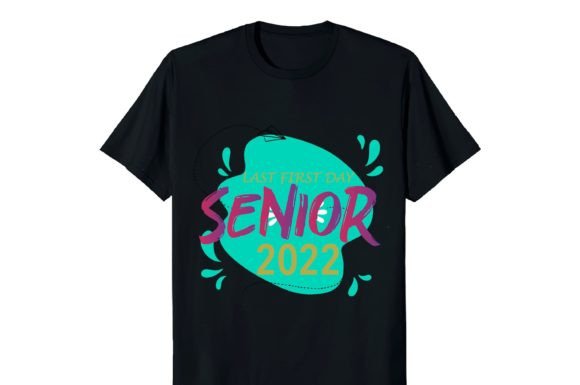
“Last First Day Senior 2022” is more than a nostalgic phrase—it’s a cultural touchstone marking the emotional pivot between anticipation and farewell in high school education. When paired with “Last First Day Senior 2022 School,” it anchors a meaningful moment: the final orientation, the last welcome assembly, the first day of senior year—imbued with gravity, pride, and reflection. This duality makes it a powerful visual motif, especially when translated into a professionally crafted, multi-format digital design asset. The Last First Day Senior 2022 School printable sublimation design serves as both a commemorative tool and a functional creative resource—one that bridges pedagogy, personal expression, and small-scale production.
Why This Design Resonates Across Diverse User Groups
Unlike generic back-to-school graphics, this design carries layered significance. For educators, it supports inclusive classroom rituals—welcoming seniors not just as students, but as soon-to-be alumni. For families, it becomes part of memory-keeping: photo booth backdrops, graduation countdown calendars, or custom apparel for senior week. For creators and small business owners—especially those operating outside traditional print hubs like the t-shirt team based in Bangladesh—it functions as a ready-to-adapt, production-ready file set that respects real-world constraints: no licensing friction, no pixelation at scale, and full editability from the source.
Its strength lies in intentionality. The phrase isn’t merely decorative; it invites pause. It acknowledges transition—not just academic progression, but identity formation. That resonance translates directly into engagement: whether printed on cotton tees for a school spirit day or laser-cut as wooden keepsakes for faculty gifts, the message lands because it’s authentic, not algorithmic.
File Formats That Enable Real-World Flexibility
The delivery package—AI, EPS, SVG, and PNG—reflects deep understanding of how design assets move through actual workflows. Each format unlocks distinct capabilities:
- AI (Adobe Illustrator): The editable master file. Designers can adjust typography, recolor elements, isolate layers, or integrate school logos without quality loss. Ideal for adapting to district branding guidelines or adding bilingual text for multilingual communities.
- EPS: Universally compatible with older RIP (Raster Image Processor) software used in commercial screen printing and embroidery digitizing—critical for vendors who still rely on legacy systems.
- SVG: Scalable vector format optimized for web use, Cricut/Silhouette cut machines, and dynamic digital displays. Enables live resizing for social media banners or interactive classroom slides without blur or aliasing.
- PNG: High-resolution raster version with transparent background—ready for immediate use in Canva, Google Slides, or print-on-demand platforms. Includes 300 DPI variants suitable for physical handouts or photo book inserts.
This isn’t over-engineering—it’s anticipatory design. A scrapbooker in Minnesota doesn’t need AI files, but they do need crisp PNGs with alpha transparency. A vinyl decal shop in Lagos needs SVG paths that cut cleanly on Roland GS-24 plotters. A textile printer in Dhaka relies on EPS for precise halftone separation. The bundle meets users where they are, not where a generic template assumes they should be.
Practical Applications Beyond Apparel
While the origin story mentions t-shirts—and yes, the Last First Day Senior 2022 design performs exceptionally well on fabric—the broader utility reveals itself across unexpected domains:
Classroom & Institutional Use
Teachers embed the SVG into digital quizzes as celebratory feedback icons. Counselors print the PNG on certificate borders for senior leadership awards. School librarians adapt the AI file to create laminated “Senior Spotlight” display headers—changing names weekly while retaining consistent visual framing.
Hobbyist & DIY Integration
Sublimation enthusiasts use the design on ceramic mugs for teacher appreciation gifts. Enthusiasts with Glowforge or xTool machines engrave the phrase onto bamboo senior memory boxes. Scrapbookers layer the PNG over scanned handwritten letters, using blending modes to create textured, journal-style layouts.
Small Business & Community Production
Local print shops in rural districts—where access to design talent is limited—use the AI file as a starting point for custom yard signs, parade floats, or PTA fundraiser merchandise. Because the vector paths are clean and text is outlined (not font-dependent), there’s no risk of missing glyphs or layout collapse during output.
Implementation Workflow: From Zip to Finished Product
The process is intentionally minimal—a reflection of respect for users’ time and technical variance:
- Unzip the archive: No installer, no registration, no cloud sync required. Just a single folder containing four clearly labeled files.
- Assess your output method: Are you heat-pressing onto polyester blends? Use the PNG at 300 DPI. Cutting adhesive vinyl? Open the SVG in Silhouette Studio and run the auto-trace if needed. Preparing for DTG printing? Import the AI file into your RIP software and assign spot colors.
- Modify only what matters: Change the year to “2023” if repurposing for next cycle. Swap “Senior” for “Graduating Class of…” if aligning with diploma ceremony language. Adjust stroke weight for embroidery compatibility—no need to rebuild from scratch.
- Test before scaling: Print a 2×2 inch sample on scrap fabric or paper. Check alignment on layered materials (e.g., iron-on + glitter heat transfer). Verify color fidelity under natural light—not just monitor glow.
This workflow avoids assumptions about user expertise. It presumes some know how to convert AI to PDF/X-1a for commercial printers; others simply drag the PNG into a Word document to make a bulletin board header. Both paths are valid—and both are supported.
Contextual Considerations for Ethical & Inclusive Use
Designs like Last First Day Senior 2022 School carry implicit responsibility. They appear in spaces where representation matters: yearbooks, school websites, community centers. Thoughtful implementation includes:
- Accessibility: When converting to large-print handouts, ensure contrast ratios exceed 4.5:1 against background color. The original design’s bold sans-serif base supports this—just avoid light gray on white in adaptations.
- Cultural alignment: Schools with dual-language instruction can use the AI file to insert translated phrases (“Último Primer Día de Bachillerato 2022”) without compromising spacing or hierarchy.
- Student agency: Rather than pre-printing hundreds of shirts, involve seniors in co-designing variations—adding club initials, mascot silhouettes, or signature lines using the editable layers.
It’s also worth noting what this design deliberately avoids: cartoonish fonts, excessive gradients, or clipart-style icons that date quickly. Its restrained aesthetic ensures longevity—not just for the 2022 cohort, but as a reusable framework for future years.
How a Bangladesh-Based Team Fits Into Global Creative Ecosystems
The note—“We are a t-shirt team from Bangladesh. You will get every day new design here”—is quietly significant. It signals participation in decentralized creative economies: designers outside traditional Western hubs contributing culturally fluent, technically rigorous assets. Their daily release rhythm responds to real-time educational calendars worldwide—U.S. August starts, Australian February intakes, South African January orientations. This isn’t mass-produced filler; it’s responsive, localized creation scaled sustainably.
For educators in Nairobi or Nashville, knowing a design originates from Dhaka adds dimension—it reflects global awareness of shared milestones. And for fellow small producers, it demonstrates viability: high-quality vector deliverables don’t require Silicon Valley infrastructure. They require precision, empathy, and attention to cross-platform interoperability—which this bundle delivers.
Long-Term Value Beyond the Calendar Year
“Last First Day Senior 2022” may seem time-bound—but its structural clarity gives it lasting utility. The composition balances negative space and typographic weight in ways that invite reinterpretation. Archive the AI file. Next year, swap “2022” for “2023” and re-export. Or extract just the “Senior” badge element to use in college application support materials. Or invert colors for dark-mode digital signage.
In essence, this isn’t a static image. It’s a design system in embryo—modular, respectful of context, and built for reuse without degradation. Whether applied to a hand-stitched quilt square or a district-wide digital welcome banner, it retains dignity because it was conceived not as decoration, but as documentation: of time, transition, and the quiet significance of showing up—once more, for the last first time.