Cat Connect the Dots Worksheet
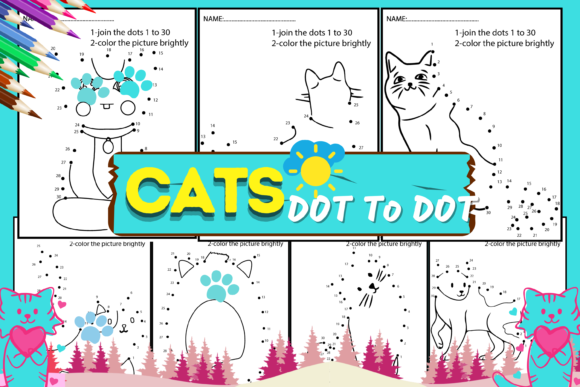
Imagine a single worksheet that quietly bridges early numeracy, fine motor development, and joyful engagement—all wrapped in playful cat illustrations. The Cat Connect the Dots Worksheet isn’t just another counting drill. It’s a thoughtfully structured 7-page PDF + 7 high-resolution JPG set designed for real-world use: crisp 8.5 × 11-inch layouts, bold tracing lines, and a consistent 1–30 sequence that builds confidence without overwhelm. Each page supports a distinct learning layer—connecting dots to reveal a cat, tracing numbers with guided strokes, then coloring within friendly outlines. That trifecta makes it unusually versatile across settings and skill levels.
Why This Design Works—Beyond Cute Cats
The strength of the Cat Connect the Dots Worksheet lies in its intentional simplicity. Thick, dark lines reduce visual noise—critical for preschoolers still refining eye-hand coordination. The 1–30 range is long enough to reinforce number order and skip-counting patterns (e.g., noticing how “20” leads into the twenties), yet short enough to sustain attention. Unlike random animal themes, the cat motif offers gentle consistency: familiar shapes, expressive faces, and subtle variety (kittens, sleeping cats, cats with bows) keep repetition engaging—not tedious. And because every number is traceable *before* connecting, it doubles as a handwriting primer. No separate workbook needed.
Creative Applications You Can Launch Today
This isn’t a static printable—it’s a springboard. Here’s how different users are already adapting it:
- Educators use individual pages as station rotations: one group connects dots while another traces numbers on laminated copies with dry-erase markers—reusable, low-prep, and differentiated by pace.
- KDP publishers bundle the 7 pages into themed activity books (“Cats & Counting Vol. 1”), add a cover and answer key, and test pricing tiers ($2.99 for digital-only, $6.99 for print + digital). The files are pre-optimized—no resizing or color correction required.
- Daycare providers print the JPGs at 150% scale for floor-based gross-motor versions: kids step on numbered paw prints taped to the floor, then return to color their “giant cat” at the table.
- Therapists incorporate the worksheets into sensory routines—pairing dot connection with tactile feedback (e.g., tracing numbers in sandpaper glue or using scented markers).
Adapting Across Ages and Goals
Don’t assume this is only for preschoolers. With minor tweaks, the same core file serves multiple developmental stages:
- Ages 3–4: Focus on number recognition and pencil grip. Use chunky crayons. Encourage verbal counting aloud while pointing—not writing.
- Ages 5–6: Introduce “skip counting by 5s” as they connect—circle every fifth dot in yellow before drawing. Reinforces pattern awareness alongside motor control.
- Early elementary (Grades 1–2): Add extension prompts: “How many whiskers does your cat have? Write that number in the corner.” Or turn it into a data activity—tally how many students drew striped vs. spotted cats.
For older learners or neurodivergent kids, consider printing on colored paper (e.g., pale blue for reduced visual stress) or pairing with a weighted pencil. Consistency matters more than complexity—keeping the cat theme and 1–30 structure intact preserves predictability, which lowers cognitive load.
Realistic Tips for Clean, Effective Implementation
Clarity starts with intention—not decoration. When using or repurposing the Cat Connect the Dots Worksheet, prioritize these practical filters:
- Limit distractions: Avoid adding clipart borders or extra text boxes unless they serve a functional purpose (e.g., a small “Start Here →” arrow for beginners).
- Maintain line integrity: If editing the JPGs, never thin the dot-to-dot lines below 2.5 pt—they must remain visible when printed on standard home printers.
- Preserve spacing: Leave generous margins (at least 0.75 inches) so binding or trimming won’t cut off numbers or cat ears.
- Test readability: Print one page, hold it at arm’s length—if you can’t instantly distinguish dot numbers from background, adjust contrast before bulk printing.
Ideas That Extend the Core Asset
You don’t need new illustrations to expand value. Try these low-effort, high-impact variations:
- Dot marker version: Replace numbered dots with circles sized for bingo daubers—ideal for kids still building pencil stamina.
- Collaborative mural: Print all 7 cat outlines on large poster paper. Assign each child 5 numbers to connect—then assemble the full “Cat Parade” on a classroom wall.
- Digital interactivity: Import the JPGs into free tools like Canva or Google Slides. Add draggable number tiles or audio clips (“Say ‘twenty-three’!”) for hybrid learning.
- Home-school integration: Pair each completed cat with a simple sentence frame: “My cat has ___ stripes.” Then count and write the numeral—blending math, writing, and language.
What Makes This Resource Trustworthy—and Why That Matters
This isn’t speculative design. The Cat Connect the Dots Worksheet was developed with direct classroom feedback and validated through KDP listing cycles—meaning it meets real formatting, usability, and discoverability standards. The files render cleanly across devices, load fast, and avoid common pitfalls (like embedded fonts that break on download). For creators, that reliability saves hours of troubleshooting. For educators, it means spending time on teaching—not tech support. For parents, it means opening a file and starting immediately—no setup, no confusion, no lost momentum.
At its core, this resource respects two truths: young children learn best through repetition *with variation*, and adults make better decisions when tools are clear, tested, and ready to apply. Whether you’re launching a KDP series, planning a back-to-school unit, or supporting a child’s daily practice—the Cat Connect the Dots Worksheet delivers focused utility without compromise. Start where you are. Use what’s working. Build from there.